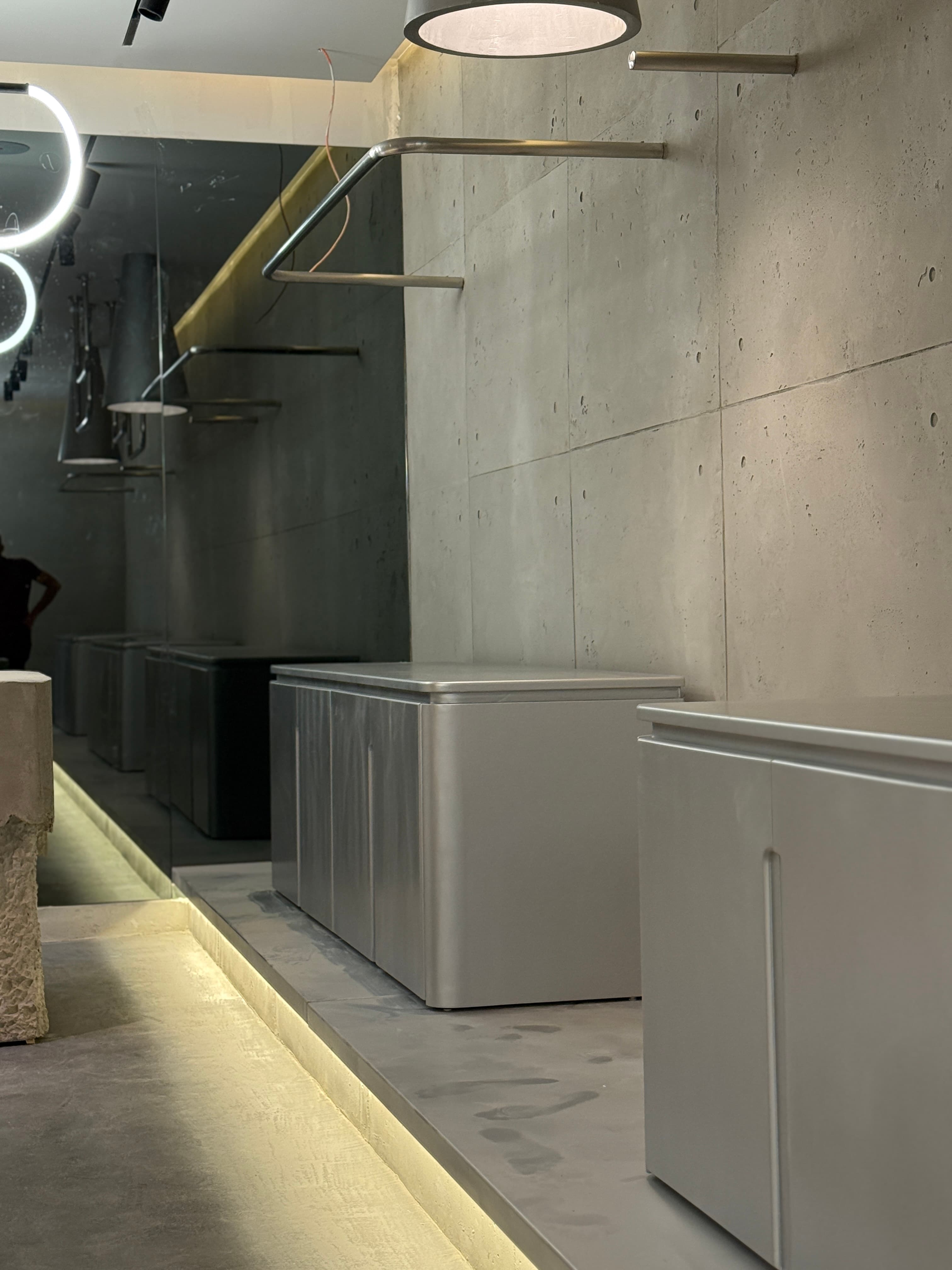

Ask any project manager what kills compressed schedules and you'll hear the same word: coordination. Materials arrive on time. Labor mobilizes on time. Then on week three someone in the MEP trade points up and says "your soffit detail doesn't have room for the air handler" — and the schedule slips a week recovering from a thirty-minute oversight.
Pattern one: ceiling-plan coordination before any drawing is sealed. Standard practice is to issue a structural ceiling plan, an MEP ceiling plan, a fit-out ceiling plan, and a lighting ceiling plan — each from a different consultant, each measuring slightly differently. Noble Line's coordination workshop forces all four onto one composite drawing with every penetration, duct, fixture, and finishing soffit shown at the same scale. We won't issue any of the four for tender until that composite reads cleanly.
Pattern two: the trade-sequence calendar. Most schedule slippage isn't about who's slow — it's about who's blocking who. Drywall can't close until conduit is in. Conduit can't be pulled until structural is signed off. Sprinklers can't be pressurized until ceiling void is finalized. A trade-sequence calendar puts every dependency on one page with a single trade-coordination lead owning it. The NIO Pavilion 30-day build wasn't faster because trades worked harder — it was because they never waited.
Pattern three: same-trade interface review. The interfaces that fail most often aren't between MEP and fit-out — they're inside MEP itself. HVAC vs fire-protection in the ceiling void. Plumbing vs electrical at the riser. We run interface-only review meetings on a separate cadence, with only the affected trades in the room, because mixing them into the general project meeting buries them.
None of this is exotic. The shortcut version reads like project-management 101. The reason it doesn't happen on most fast-track projects isn't that teams don't know about it — it's that the brief usually arrives with a tendered design package that already locked the ceiling decisions before coordination happened. Insisting on the coordination upstream is the discipline that lets a 30-day pavilion handover without punch lists.